
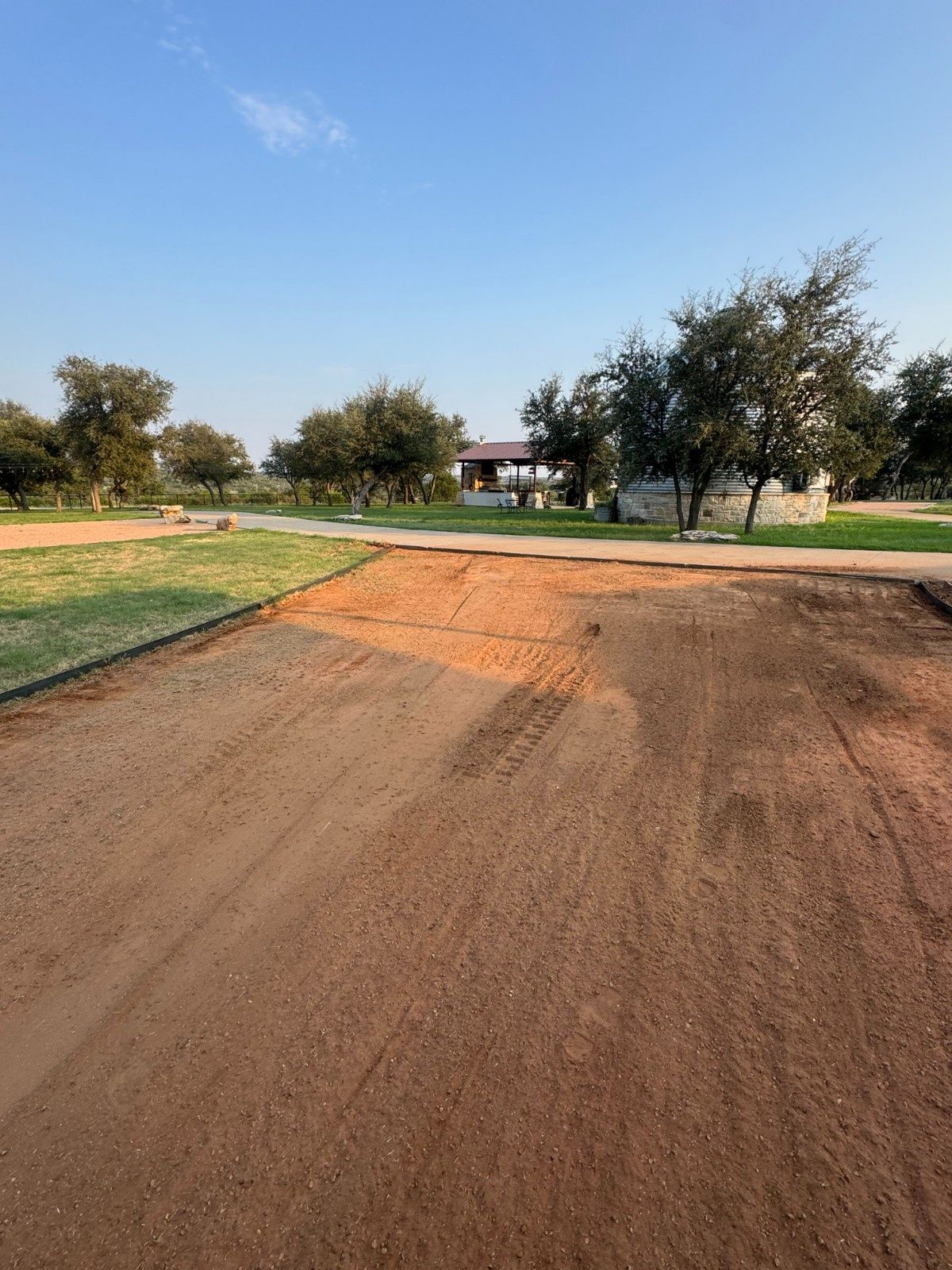
Create a Stable Base Before Planting or Building
Leveling & Grading in Aledo for yards with standing water, uneven surfaces, or slopes that direct runoff toward structures
Twin County Outdoor Services performs land leveling and grading for homeowners in Aledo who need a properly sloped foundation before installing sod, patios, walkways, or drainage systems. You see low spots that collect water after every rain, uneven ground that makes mowing difficult, or slopes that send runoff directly toward your home's foundation instead of away from it. Grading corrects these issues by reshaping the soil to create a smooth, stable surface with the right slope to move water safely off the property and support the landscaping improvements that follow.
The process involves removing high spots, filling depressions, and using grading equipment to establish a consistent slope across the yard. Soil is compacted in layers to prevent future settling, and the finished grade is checked to ensure water flows toward drainage points rather than pooling near buildings or hardscapes. Grading is often required before sod installation to prevent uneven rooting, before patio construction to ensure proper support, and before landscape redesigns to address existing drainage problems. The work is suitable for residential yards, commercial sites, and new construction projects where the natural grade does not meet functional or safety requirements.
If your yard has drainage issues or uneven areas that interfere with landscaping plans, contact us to evaluate the site and discuss grading options that prepare the ground for your next project.
What You Notice After Grading Is Finished
Once the yard is leveled and sloped correctly, you will see that water no longer pools in low areas after storms, and the soil surface is smooth enough to walk across without tripping over bumps or sinking into soft spots. The ground feels firm and stable, with a consistent slope that directs runoff toward the street, drainage easements, or designated collection points. Grass or sod installed on the graded surface establishes evenly because roots grow into level soil instead of struggling in pockets of compacted clay or loose fill.
Twin County Outdoor Services ensures that the slope is gradual enough to prevent erosion while still moving water efficiently away from foundations and hardscapes. The finished grade is ready for immediate use, whether you are planting, laying sod, or installing outdoor features. You will notice that the yard looks cleaner and more functional, with a surface that supports foot traffic and equipment without creating ruts or uneven wear patterns.
The time required depends on the size of the area, the amount of soil that needs to be moved, and the presence of obstacles like trees, utilities, or existing structures. The service does not include soil amendment, topsoil delivery, or removal of large roots or debris, though those steps can be added if needed. If your property has severe drainage problems, grading may be combined with French drains or surface channels to manage water from all sources.
These questions come up frequently when property owners in Aledo are planning landscape projects or trying to solve drainage and erosion problems through grading work.
Questions Homeowners Ask About Leveling and Grading
What slope is necessary to move water away from a foundation?
A minimum slope of one to two percent, or about one to two inches of drop per ten feet, is typically enough to direct water away from structures without causing erosion on the surface.
How does grading prevent future settling?
Soil is compacted in layers during grading to remove air pockets and create a stable base that resists sinking under the weight of sod, foot traffic, or landscape features.
When should grading be done before sod installation?
Grading should be completed and allowed to settle for a few days before sod is laid, so the surface remains level and roots establish in stable soil rather than shifting fill.
Why does clay soil in Aledo affect grading work?
Clay holds water and compacts unevenly, so grading in clay requires careful moisture management and may take longer to achieve a stable, workable surface than grading in sandy or loamy soil.
How do you know if grading alone will solve drainage problems?
Grading works well for surface water and mild pooling, but properties with high water tables, underground seepage, or severe erosion often need French drains or other subsurface systems in addition to slope correction.
When you are ready to prepare your yard for landscaping or resolve drainage issues that grading can address, reach out to Twin County Outdoor Services to schedule a site evaluation and receive a grading plan tailored to your property's soil and slope conditions.