
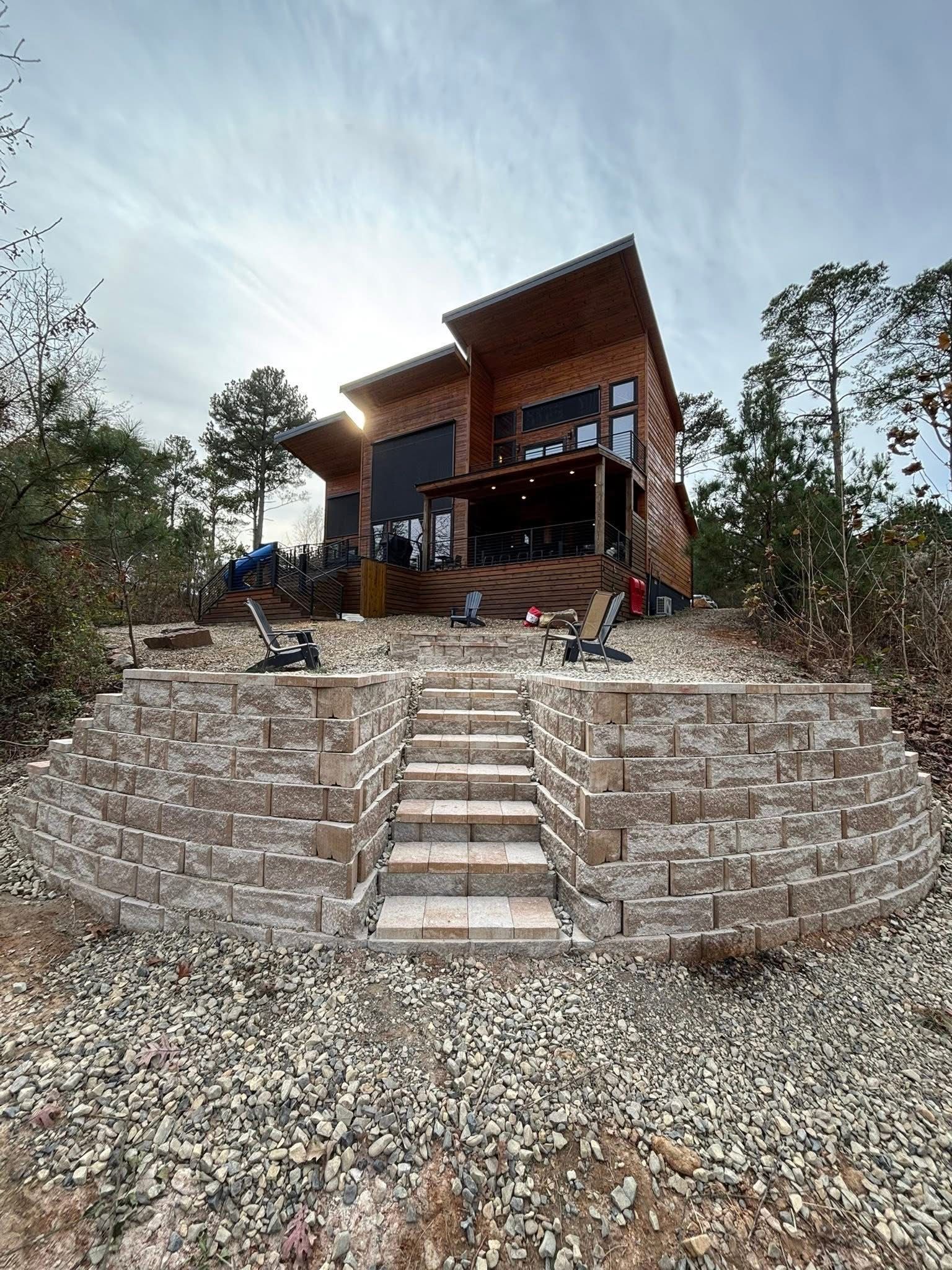
Walls That Hold Slopes and Redirect Water
Retaining Walls in Aledo for properties with elevation changes, erosion concerns, or unusable sloped yard sections
Twin County Outdoor Services builds retaining walls that stabilize slopes and prevent soil from washing downhill during heavy rain, which is common when properties sit on uneven terrain or near drainage paths. You receive a structure built with proper base preparation and drainage planning, designed to hold the grade without shifting or cracking as the ground settles over time.
The walls are constructed using stone or block materials selected to match existing landscape features and withstand freeze-thaw cycles without deteriorating. Each installation begins with excavation and compacted base material, followed by careful placement of each course to ensure the wall remains level and structurally sound under the pressure of retained soil and water movement.
If your yard has areas you cannot mow or plant due to steep slopes, or if erosion is undercutting existing beds, contact Twin County Outdoor Services to discuss retaining wall options in Aledo.
What Changes When a Retaining Wall Is Installed
Your retaining wall project begins with site evaluation to determine wall height, necessary setback, and drainage requirements. Base excavation extends below the frost line, and compacted gravel provides a stable foundation that resists settling. Drainage pipe is installed behind the wall to channel water away rather than allowing hydrostatic pressure to build up and push against the structure.
After the wall is completed, you will notice a stable, level area where the slope used to be, allowing you to plant, install sod, or create usable outdoor space. Twin County Outdoor Services backfills behind the wall with gravel and soil in layers, compacting each to prevent voids that could lead to shifting, and the finished structure creates defined tiers that improve both function and appearance.
Retaining walls do not include landscaping or planting in the newly created space unless arranged separately. The focus remains on building a durable structure that manages soil and water correctly, with materials chosen for longevity rather than requiring frequent repair or adjustment.
Homeowners often ask about wall height limits, material durability, and how drainage is managed to prevent wall failure. The following answers address practical concerns specific to properties in Aledo.
Common Questions About Retaining Wall Construction
What determines the height and placement of a retaining wall on a sloped property?
The wall height is based on the elevation change, soil type, and intended use of the retained area, with taller walls requiring deeper footings and additional drainage to manage soil pressure.
How does the drainage system behind the wall prevent water buildup and structural failure?
Perforated pipe installed at the base of the wall collects groundwater and directs it to a safe discharge point, preventing hydrostatic pressure that can cause the wall to lean or crack over time.
When is a retaining wall necessary instead of regrading or planting ground cover?
Walls are required when the slope is too steep to hold soil with vegetation alone, when space constraints prevent grading, or when elevation change exceeds what can be managed with terracing and plants.
Why do some retaining walls develop cracks or lean forward after installation?
Insufficient base preparation, lack of drainage, or improper backfill compaction allows the wall to shift under soil pressure, which is why each layer is compacted and drainage is integrated during construction.
What material options are available and how do they perform in Aledo's climate?
Natural stone and concrete block both perform well in North Texas weather, with stone offering varied texture and block providing uniform appearance and easier installation on taller walls.
Twin County Outdoor Services works with property owners who need slopes stabilized and yard space expanded without ongoing erosion or structural concerns. Schedule a site visit to review your property's elevation and discuss wall design tailored to your lot and long-term goals.